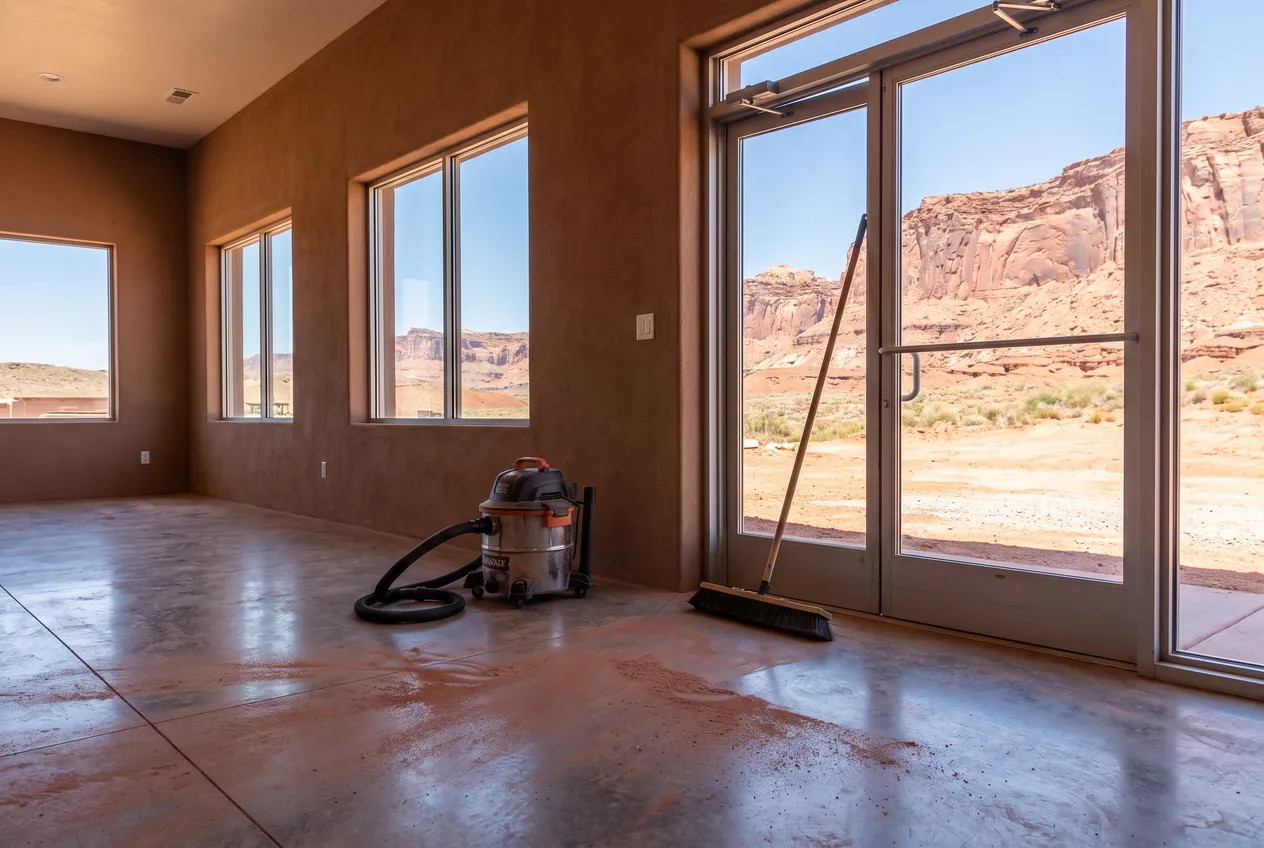
Why one pass never finishes the job
Drywall sanding and concrete cutting throw off a powder fine enough to float for hours. It drifts into ceiling grids, rides the air handler into supply ducts and lands on surfaces that were wiped clean the day before. Booking a single clean at the end of a project almost guarantees a second visit, because the dust keeps coming down after the crew leaves and trades are still finishing small items.
Splitting the work into phases matches the cleaning to what is actually happening on site. Each pass has a different goal, a different crew size and a different standard. Knowing which phase you are buying keeps the quote honest and keeps you from paying for detail work that the painters will undo the next morning.
The three phases at a glance
Use this table when you talk timing with the general contractor. The point where one phase ends and the next begins should be tied to a milestone on the schedule, not to a calendar date that may slip.
| Phase | When it happens | What the crew focuses on |
|---|---|---|
| Rough clean | After drywall, paint and heavy trades wrap | Loose debris, bulk dust, scraps and packaging set aside for the contractor's haul-off |
| Final clean | Before the inspection, walkthrough or turnover | Top-to-bottom detail: vents, fixtures, glass, tracks, cabinet interiors, ledges, floors |
| Touch-up | A day or so before staff or tenants move in | Dust that resettled, fingerprints from installers, restrooms and entry floors |
| Punch list return | After the contractor closes open items | Spots disturbed by late repairs, plus anything flagged on the walkthrough |
Final clean checklist, top to bottom
Order matters more here than on any other cleaning job. Anything wiped before the area above it is finished will need wiping again. Crews start at the ceiling and work down to the floor, room by room. Dry dusting with a feather duster or a dry rag just lifts the powder into the air so it can land somewhere else, which is why a competent crew carries HEPA vacuums with brush attachments and wipes with damp microfiber.
Glass, metal and new finishes each have their own care instructions from the manufacturer. Paint flecks and adhesive drips come off with a scraper and product suited to that surface, not whatever blade is handy. A careless scraper on coated glass or brushed hardware leaves a scratch that is now part of the building.
- Ceiling grids, diffusers and return grilles vacuumed
- Light fixtures and lenses wiped inside and out
- Tops of door frames, ledges and soffits
- Window frames, sills and sliding tracks
- Protective film, stickers and labels removed
- Paint and adhesive drips lifted with the right tool
- Cabinet and drawer interiors vacuumed, then wiped
- Outlet covers, switch plates and baseboards
- Restroom fixtures, partitions and mirrors
- Floors cleaned for their specific finish
Floors need their own plan
A new floor is not ready just because it is installed. Fresh resilient tile often needs floor finish applied before it sees traffic, and that is a separate step from removing the construction grit on top. Sealed concrete gets a damp clean that leaves the sealer alone. New carpet gets a thorough vacuum, and any spots from paint or caulk are treated with care so the fibers are not damaged.
Ask the flooring installer what the floor needs in its first weeks and pass that to the cleaning company before the final clean. If the floor maker says to wait a set period before finish or wet cleaning, the cleaning schedule should respect it. Getting this wrong on day one can cost you a floor that should have lasted years.
Settle who does what before anyone starts
Most disputes on a post-construction job come from assumptions. The cleaning crew thinks the dumpster belongs to the contractor. The contractor thinks the cleaners will swap the air filters. Neither is written down. Debris haul-off and dumpsters are usually the general contractor's responsibility, and replacing HVAC filters is a decision for the HVAC contractor or the building, not something to assume the cleaners will handle.
Before the crew is booked, get answers on site access, whether power and water are live, the hours work is allowed, where equipment can be staged and any safety rules for the site. A crew that arrives to a locked door or a dead outlet burns your schedule.
- Who removes debris, cardboard and leftover materials
- Whether power, water and restrooms are working
- Allowed working hours and site safety rules
- Who handles HVAC filters after the dust settles
- Who signs off on each phase
Building out in St. George
Commercial build-outs keep coming in Washington County, and new tenant spaces along Red Cliffs Drive are a common source of these requests. The dry air here works against a quick finish. Construction powder that might clump and drop in a humid climate stays light and airborne longer, so it keeps settling on ledges and fixtures for days after the saws go quiet. Planning a touch-up close to move-in is less of an option here and more of a requirement.
Red dust from outside adds a second layer. Open doors during the final weeks of a job let fine sand blow onto fresh floors and into window tracks. Keeping entries closed when possible and laying down temporary mats near the doors cuts down on how much the final crew has to remove.