What strip and wax actually means now
The phrase is older than the products. Very few commercial floors get true wax anymore. What goes down is an acrylic floor finish, a liquid that dries into a hard protective film over the tile. Over months of traffic that film scratches, yellows and collects ground-in soil. Stripping removes it down to bare tile, and the new coats start the cycle over.
Vinyl composition tile, the square tile found in clinic hallways, break rooms and older offices, is the floor most often handled this way. It is porous on its own and looks flat and chalky without finish, so it depends on that protective layer. Other surfaces can carry finish too, but VCT is the one a strip and wax quote is usually written around.
Check the floor before anyone touches it
Stripper is strong chemistry, and the wrong floor will not survive it. Many luxury vinyl tile and plank products, along with floors sold as no-wax, carry manufacturer instructions against stripping or against finish altogether. Putting a stripper and an aggressive pad on those surfaces can dull or damage the wear layer permanently.
If you do not know what is on the ground, look for the original flooring paperwork or ask whoever manages the building. A reputable provider will ask the same question and should check the floor maker's guidance before quoting. When the answer is unclear, a small test area in a closet or corner is safer than finding out across the whole lobby.
- Vinyl composition tile: the standard candidate
- Luxury vinyl tile or plank: check the maker first
- No-wax sheet vinyl: usually not stripped
- Sealed concrete: a different maintenance routine
- Natural stone: needs stone-specific care
- Carpet tiles: extraction, not stripping
The process, step by step
Each step depends on the one before it. Skipping the neutralizing rinse, for example, can leave residue that keeps the new finish from bonding, and the floor starts peeling within weeks. Rushing the drying time between coats traps moisture and leaves a cloudy surface. The table below shows the order a careful crew follows and why each piece matters.
Coats go on thin. Several thin layers, often three to five, build a tougher and clearer surface than one or two heavy ones, which take longer to dry and tend to stay soft. A clean mop or applicator for each coat keeps grit out of the film.
| Step | What the crew does | Why it matters |
|---|---|---|
| Clear the room | Move furniture, bins and mats out of the work area | Stripper pools under anything left in place |
| Dust mop | Remove loose grit and debris | Grit scratches the bare tile under the machine |
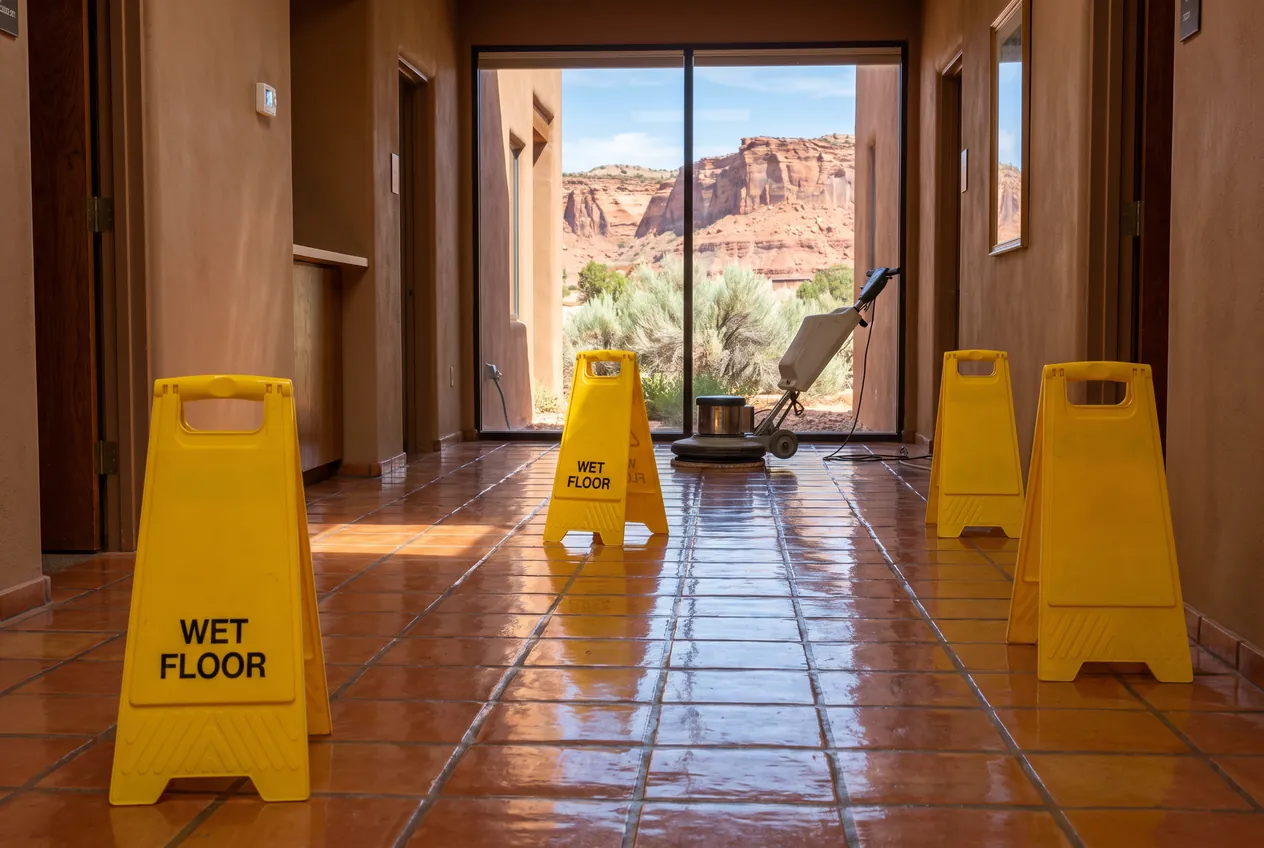
| Set signs | Put out wet floor signs and block entries | Stripped floors are extremely slippery |
| Apply stripper | Spread solution and let it dwell | Dwell time softens old finish so it releases |
| Scrub | Low-speed machine with a stripping pad, hand tools at edges | Breaks up softened finish across the whole floor |
| Pick up slurry | Wet vacuum the dissolved finish | Leftover slurry redeposits as it dries |
| Rinse and neutralize | Clean water passes, often two, plus neutralizer | Residue stops new finish from bonding |
| Dry | Let the bare tile dry completely | Moisture under finish turns it cloudy |
| Coat | Several thin coats of finish, drying between each | Builds a hard, clear protective layer |
| Burnish later | Optional high-speed buff once cured | Raises the gloss and tightens the surface |
Scrub and recoat between full strips
A full strip removes every layer of finish and takes the most time. It is not the only option. When the top coats are scuffed but the base layers are still sound, a crew can deep scrub the surface to remove soil and the worn top film, rinse, and lay down fresh coats. That scrub and recoat restores much of the look with less chemistry and a shorter closure.
Most buildings rotate between the two. Full stripping often lands once or twice a year, depending on how heavy the traffic is, with scrub and recoat visits and regular burnishing in between. A hallway outside an exam room will need attention sooner than a storage room nobody walks through.
Timing, drying and keeping people off the floor
Stripper fumes call for ventilation, a stripped floor is slick, and finish needs uninterrupted drying time. Those three facts are why the work usually happens after hours or across a weekend. Tell the provider exactly when the space empties and when the first person walks back in, so the crew can plan coats around the real window instead of an optimistic one.
Plan for the rooms around the work too. Doors may need to stay propped for airflow, alarms may need adjusting, and staff need to know which entrance to use the next morning if a corridor is still curing.
Red dust and finish wear in St. George
Fine red sand blows across parking lots and sidewalks here and rides in on every pair of shoes. On a finished floor it acts like grit paper, cutting fine scratches into the top coat with each step. The result is a dull traffic lane from the entrance to the reception desk long before the rest of the floor looks tired. VCT in medical buildings along the hospital corridor on 400 East takes this from patients and staff all day.
The cheapest way to stretch the time between strips is to stop the sand at the door. Entry mats long enough to catch several steps, cleaned or swapped before they fill, plus daily dust mopping, protect the finish more than any extra coat does.