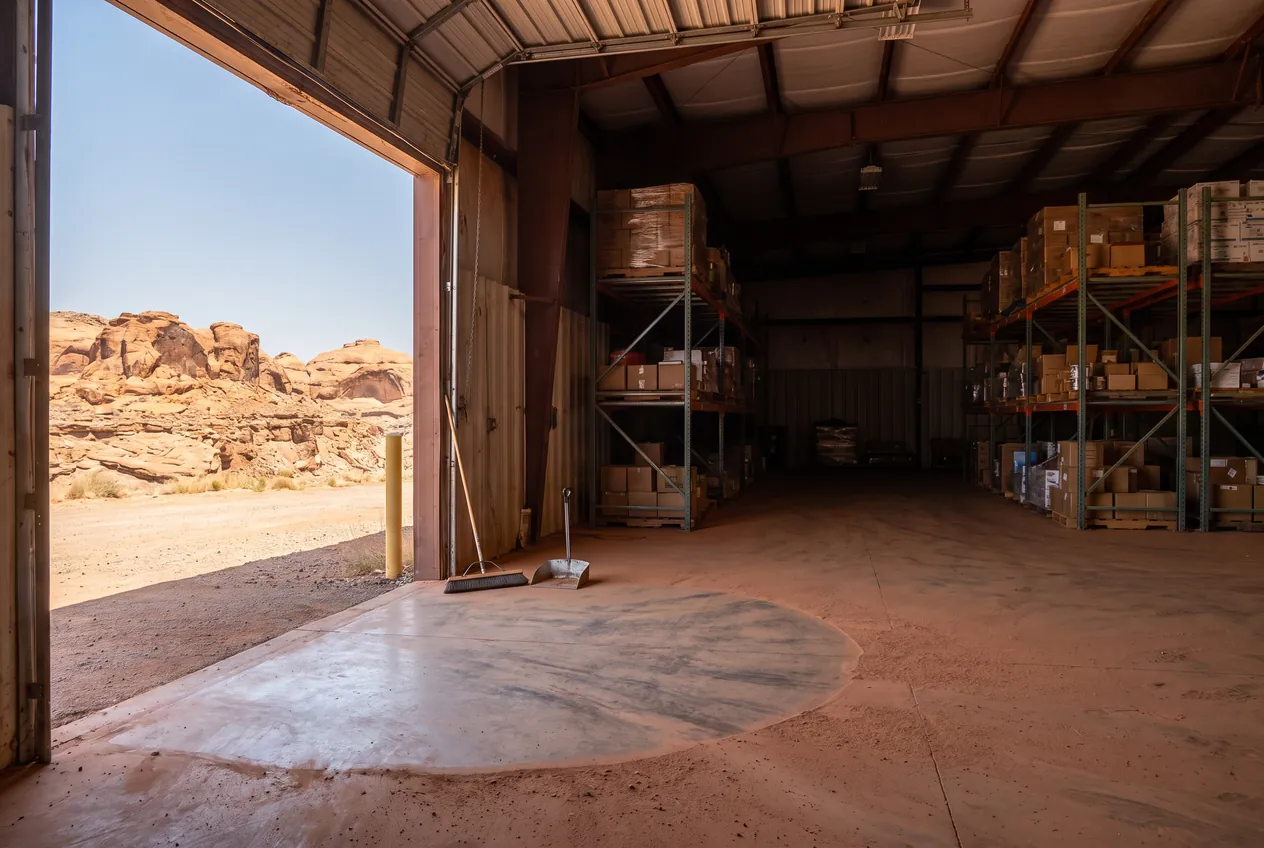
The floor is the main event. On sealed or bare concrete, a ride-on sweeper goes first to collect grit, film scraps and splinters, and an auto scrubber follows, putting down solution and vacuuming it back up in a single pass. Working in that order keeps debris from clogging the scrubber's squeegee. Tire marks, spilled product and oil drips get spot treatment. On a busy floor, the crew works aisle by aisle in zones the site supervisor approves, so picking and loading keep moving around them.
Safety drives the plan. Lift trucks, pallet jacks and people on foot all use the same aisles, so the crew obeys the building's traffic rules, puts on whatever PPE the site requires, usually a reflective vest and safety footwear, and keeps clear of lanes in use. OSHA, the federal workplace safety agency, expects walking and working surfaces kept clean, orderly and hazard-free, so floor care is part of running the building safely, not only part of how it looks. Overhead work on racks, beams, lights and HVAC returns needs a lift and an operator trained to run it, so it is usually booked for a slow shift.
Two mistakes come up often. The first is treating the warehouse as nothing but a floor. The offices, break room, restrooms and locker rooms are used by every shift and need the same routine care as any workplace, often nightly. The second is skipping the docks. Dock doors open all day, and dirt, leaves, broken pallet wood and loose shrink wrap pile up along the door seals and in corners a sweeper cannot reach. A scope that names the docks, the staff rooms and the floor separately is far easier to hold a provider to.
Red sand on warehouse floors across Washington County
Every time a dock door rolls up in St. George, dry wind can push fine red sand onto the concrete, and forklift tires carry it deep into the aisles. That grit acts like sandpaper on floor sealer and wears it down fastest in the lanes that see the most traffic. Long hot days keep big HVAC systems working hard, so return grilles and filters in the warehouse office and break room load up quickly. Plenty of warehouse space pairs the floor with a small front office, which means one plan has to cover both the concrete and the carpeted rooms up front.
Warehouse requests come in from Washington, Hurricane, Bloomington and St. George itself, along with Mesquite across the Nevada line. Operations with a single daytime shift usually have the floor scrubbed in the evening after the last truck leaves. Buildings running two or three shifts tend to clean zone by zone, rotating through sections so nothing has to shut down. Share your shift times, dock hours and any stretch of peak shipping when the crew should stay off the floor so the provider can plan around them.
How often warehouse cleaning tasks tend to run
| Job | Frequency |
|---|---|
| Offices, break rooms and restrooms | Nightly or once per shift |
| Locker rooms cleaned | Nightly to a few times a week |
| Traffic aisles swept | Daily to a few times a week |
| Dock areas cleared of debris and wrap | Daily to weekly |
| Concrete floors auto scrubbed | Weekly to monthly |
| High dusting of racking, beams and fixtures | Every 3 to 12 months |
| Floor sealer or coating refreshed | As traffic wear shows |
Treat this as a starting draft. The provider will adjust it after walking your building and talking through how your people use the space.
What the work usually covers
- Ride-on sweeping of aisles and open floor
- Auto scrubbing of sealed or bare concrete
- Spot treatment for oil and tire marks
- Dock areas cleared of pallet debris
- Warehouse offices and break rooms cleaned
- Restrooms and locker rooms disinfected and restocked
- Trash and cardboard staged for pickup
- High dusting of racking from lifts
You and the provider nail down the exact tasks and schedule when they put the quote together.
What drives the cost of warehouse cleaning
- Open floor area
- The square footage of concrete sets how long the sweeper and scrubber run. Narrow aisles and dense racking slow the machines down compared with wide open floor.
- Equipment and lifts
- Ride-on scrubbers handle most floors, but high dusting needs lifts and trained operators. Whether the provider brings the equipment or uses the site's own changes the quote.
- Shifts and access
- Cleaning a site that goes quiet after the day shift is simpler than one that never stops, where the crew moves zone by zone and waits for lanes to open up.
- Staff spaces
- Every office, restroom, break room and locker room adds steady janitorial time on top of the floor work, and a bigger headcount per shift means more restocking and trash.
Related services in St. George
- Floor Care in St. George
- Janitorial Services in St. George
- Day Porter Services in St. George
- Post-Construction Cleaning in St. George
Cleaning for other types of business in St. George
- Restaurant Cleaning in St. George
- Church Cleaning in St. George
- School and Daycare Cleaning in St. George
Guides
Where requests reach us from
Businesses across the St. George area send us warehouse cleaning requests, from St. George, Washington, Hurricane, Santa Clara, Ivins, Bloomington and beyond. See all areas.