Disinfection only works on a clean surface. Dust, food residue and skin oils shield whatever sits underneath, so the crew wipes away visible soil first and disinfects second. Skipping that first step is the most common shortcut, and it means the product lands on grime instead of the surface. In a busy building, the order matters most at the spots everyone touches: entry door pulls, elevator buttons, front counters, break room handles, restroom faucets and flush levers. Staff and customers notice a grimy door pull long before they notice a dusty shelf.
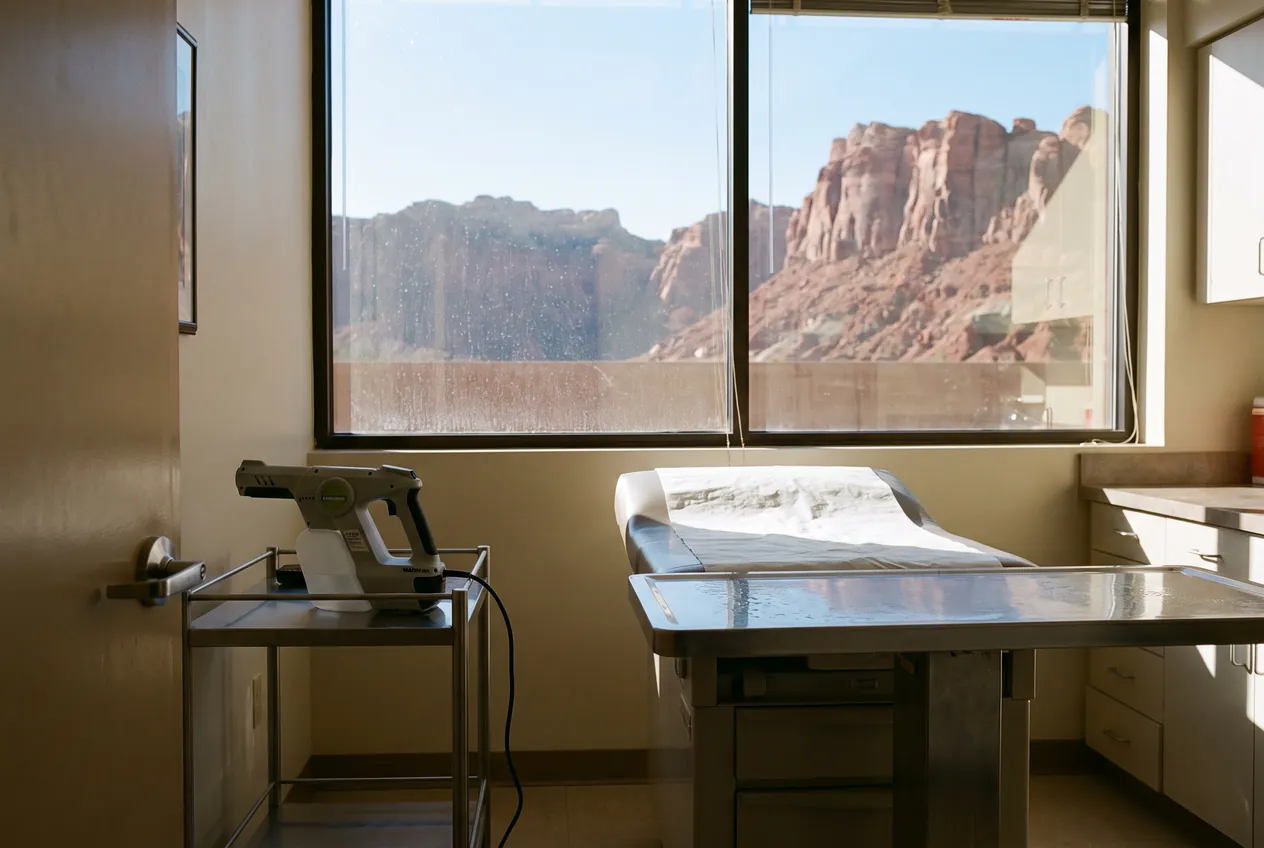
Disinfectants sold in the United States are registered with the U.S. EPA, and every label lists a contact time, sometimes called dwell time. That is how long the surface has to stay visibly wet for the product to work as the label describes. A quick spray followed by an immediate wipe usually falls short of it. Electrostatic sprayers charge the droplets so they wrap around handles and curved surfaces, which helps coverage on large areas, but the contact time still applies. A provider should be able to tell you which product they use and why.
It helps to know what this service does not cover. Routine commercial disinfection is not biohazard cleanup. Blood from an injury, crime or trauma scenes and sewage backups are handled by specialist remediation companies with their own training and disposal methods, and a standard cleaning crew should not take those on. Another common mistake is using one cloth across an entire floor, which just carries residue from the restroom to the break room. Color-coded cloths, fresh mop heads and a route that runs from cleaner areas to dirtier ones keep the work from undoing itself.
Where disinfection fits in St. George buildings
St. George has a large share of medical space, from clinics in Dixie Downs to the corridor near the hospital on 400 East, and Washington County skews older, so waiting rooms stay full of patients and visitors through the day. Hospitality adds hotel lobbies, fitness rooms and shared restrooms with steady turnover. Red dust plays a part too. It settles on counters and handles between visits, and it has to come off before any disinfectant can do its job. A plan that pairs a thorough wipe-down with disinfection of the touch points suits most buildings here.
Most requests here come from medical and dental offices, gyms and studios, schools and daycares, and multi-tenant buildings with shared restrooms. Daily disinfection of touch points usually rides along with the regular evening janitorial visit, so the building is ready when staff unlock in the morning. Some businesses add a midday pass on restrooms and entry doors during their busiest hours. Others book a one-time deeper round after a run of sick days around the office. Say which approach you want when you ask for a quote.
What changes the cost of a disinfection plan
- Number of touch points
- A building with many restrooms, shared desks, doors and pieces of equipment simply has more surfaces to clean and treat on each visit, and that drives time on site.
- Frequency
- Disinfecting touch points as part of every nightly visit is priced differently from a monthly deep round or a single service booked after a run of sick days.
- Method and product
- Hand application with cloths, electrostatic spraying and specialty products for sensitive surfaces each call for different equipment, supplies and labor to do properly.
- Type of facility
- A dental office or gym asks for more detailed work and tighter routines than a small professional office, and the quote follows the scope of what has to be covered.
How often disinfection tasks tend to run
| Job | Frequency |
|---|---|
| Door handles, push plates and switches | Every visit |
| Restroom fixtures and partitions | Every visit |
| Front counters and check-in areas | Every visit |
| Break room handles and appliance fronts | Every visit |
| Shared phones, keyboards and equipment | Daily to weekly |
| Electrostatic spraying of larger areas | Weekly to monthly, if used |
| Full-building deep disinfection | As needed |
Treat this as a starting draft. The provider will adjust it after walking your building and talking through how your people use the space.
What the work usually covers
- Cleaning surfaces before applying disinfectant
- EPA-registered products used as labeled
- Door handles, switches and elevator buttons
- Restroom sinks, faucets, toilets and partitions
- Counters, desks and check-in areas
- Break room tables, handles and appliance fronts
- Electrostatic spraying where it fits the space
- Color-coded cloths to limit cross-contamination
You and the provider nail down the exact tasks and schedule when they put the quote together.
Commercial Disinfection Services by type of business
Where requests reach us from
Businesses across the St. George area send us disinfection requests, from St. George, Washington, Hurricane, Santa Clara, Ivins, Bloomington and beyond. See all areas.
More cleaning services in St. George
- Commercial Cleaning in St. George
- Office Cleaning in St. George
- Janitorial Services in St. George
- Medical Office Cleaning in St. George
- Floor Care in St. George
- Post-Construction Cleaning in St. George
- Day Porter Services in St. George
- Commercial Carpet Cleaning in St. George
- Commercial Window Cleaning in St. George